

Almost everyone returns from Lençóis with the same feeling: the photos don’t do it justice. The sand comes out too white, the lagoon loses its blue, and that field of dunes that seemed infinite turns into a pale strip with no beginning or end. It’s not a lack of equipment. It’s just that the landscape requires its own way of being read.
Lençóis is made of two things that cameras capture poorly: texture and scale. Photographing well here is, above all, a matter of timing and reference. The rest comes later.
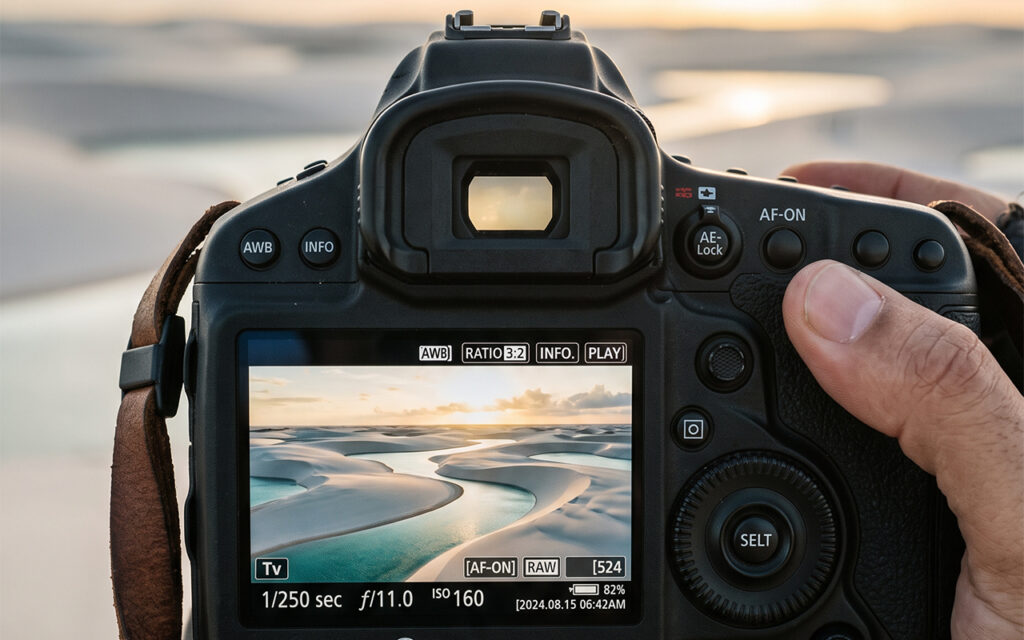
There is a conflict of interest in Lençóis photography that nobody tells you beforehand. The dunes demand low sun, because it is the grazing light that reveals the ripples in the sand and creates the shadows that provide depth. The lagoons demand high sun, because it is the vertical light that penetrates the water and brings out that seemingly impossible turquoise-green.
In other words: you cannot solve everything in a single outing. The ideal trip for photographers includes at least one early morning outing, one around midday, and one late afternoon session, on different days.
Departure at 4:30 AM. The sand is still footprint-free and light sweeps close to the ground. It is the only moment with untouched dunes and long shadows.
Between nine and eleven, the water receives enough light to reveal color without blowing out the white sand. A good compromise for those with only one day.
The worst light for dunes, but the best for lagoons. The turquoise appears in full intensity. Use a polarizer and accept that the sand will look flat.
Golden hour is brief and worth every minute. The sand turns amber, the crests gain definition, and the lagoons turn into mirrors.
The twenty minutes after sunset. The sky still holds color, dunes are in silhouette, and the water reflects it all. Requires a tripod.
With no surrounding artificial light, the park’s sky displays the Milky Way to the naked eye between May and October. Tripod, high ISO, and a fast lens required.
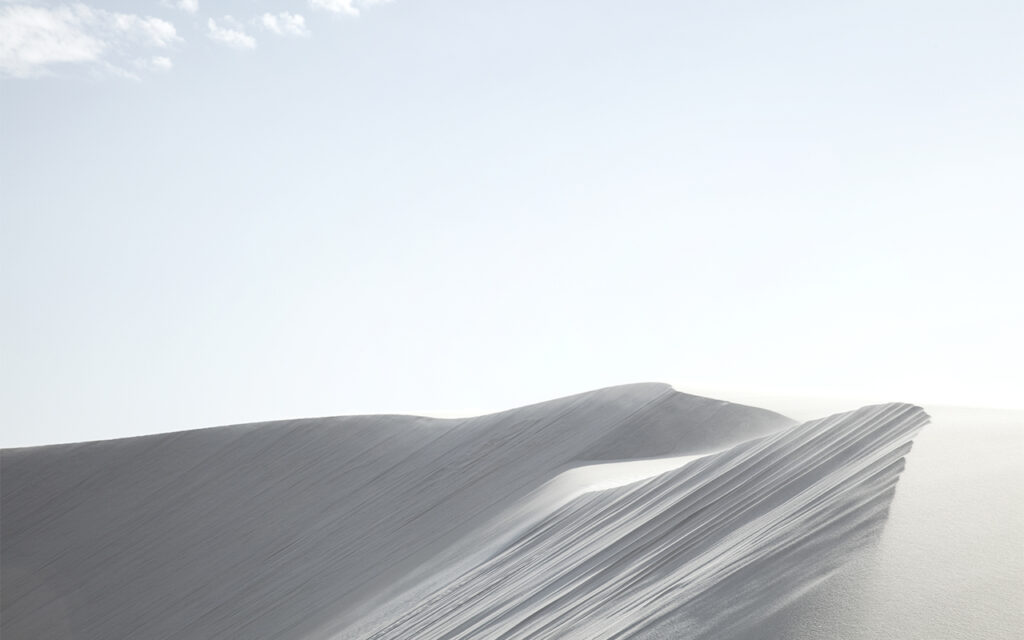
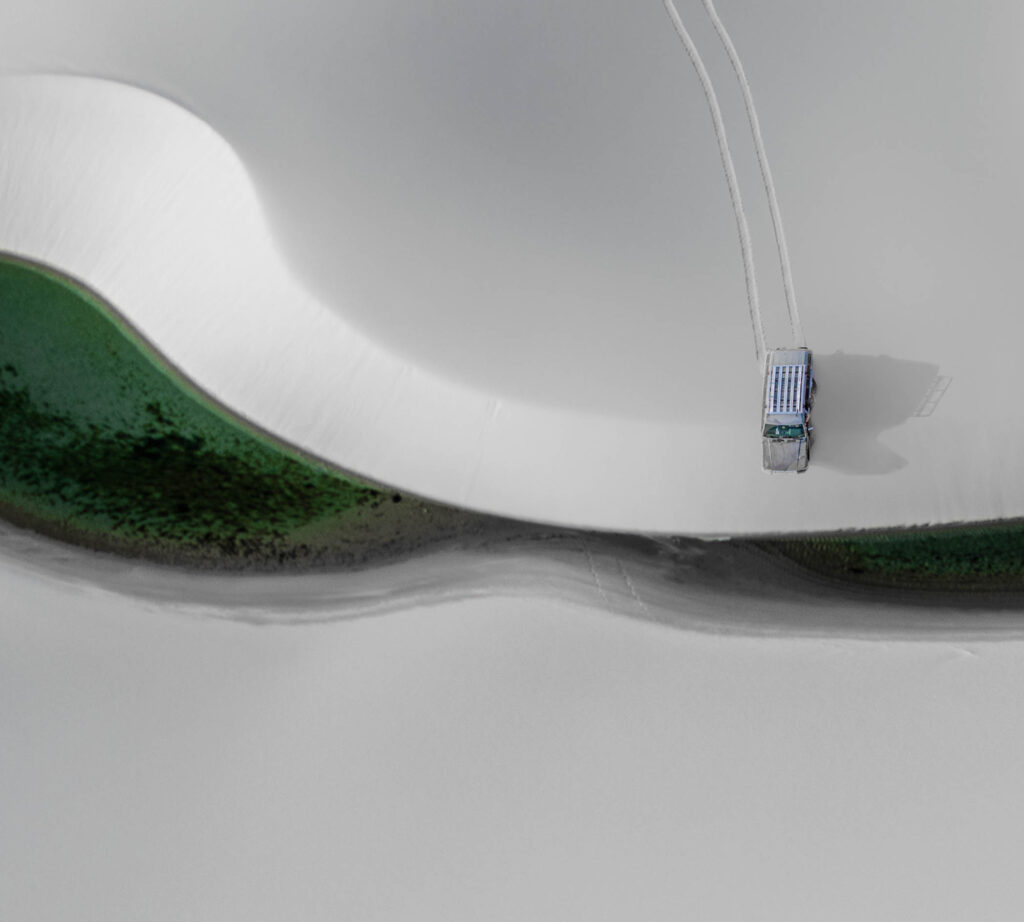
This is the most common mistake. Without a reference point, a seventy-meter dune and a two-meter mound of sand produce the exact same image. The solution is always the same: place a person in the frame—small, far away, walking along the ridge. Solid-colored clothing works best, and warm or dark tones stand out sharply against the white sand.
Three other habits change the outcome. Shoot from a low angle, placing the camera almost on the ground, so the sand ripples become the foreground. Use the ridges as diagonal leading lines rather than centering the horizon. And on clear-sky days, give less space to the sky: an empty blue occupying half the frame steals the attention the sand deserves.
At the lagoons, bring the lens close to the water’s surface. Just inches above it, the reflection aligns and the dune on the opposite side appears mirrored. It is the shot almost no one takes because it requires kneeling on the wet sand.
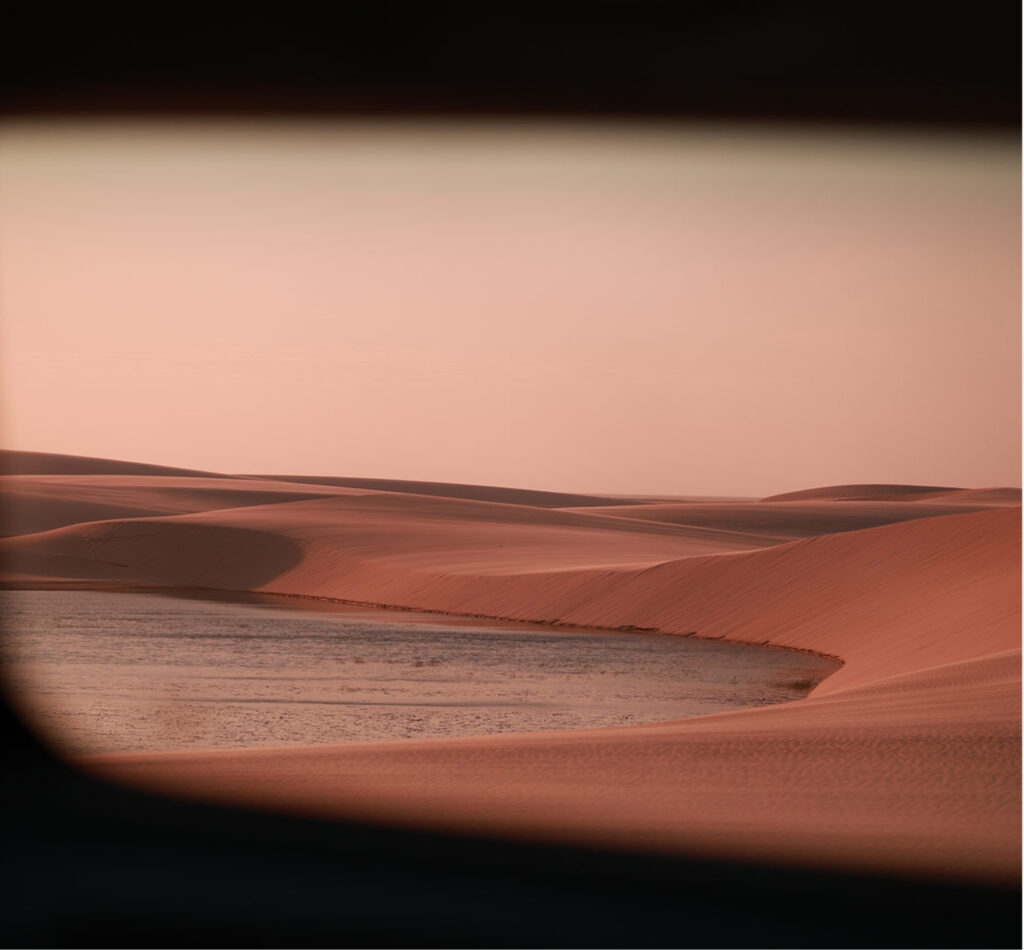
A wide-angle lens takes care of scale and foreground shots. A telephoto lens, which almost no one brings, compresses the layers of dunes into overlapping bands and creates the most graphic images in the park. If you can choose only one item besides the camera body, bring a circular polarizer: it cuts surface glare, deepens the blue, and is the single irreplaceable accessory here.
The sand is the real enemy. Do not change lenses outdoors when it’s windy, store your gear in a sealed bag between stops, and carry a microfiber cloth for the sea spray, which fogs up the front element without warning. Bring extra batteries as well, since the heat drains them faster than expected.
For smartphone photography, three adjustments do most of the work: wipe the lens clean before every shot, lock exposure by tapping on the light sand and dragging the brightness slightly down, and use the ultra-wide lens while holding the device close to the ground. If your phone supports RAW capture, turn it on.
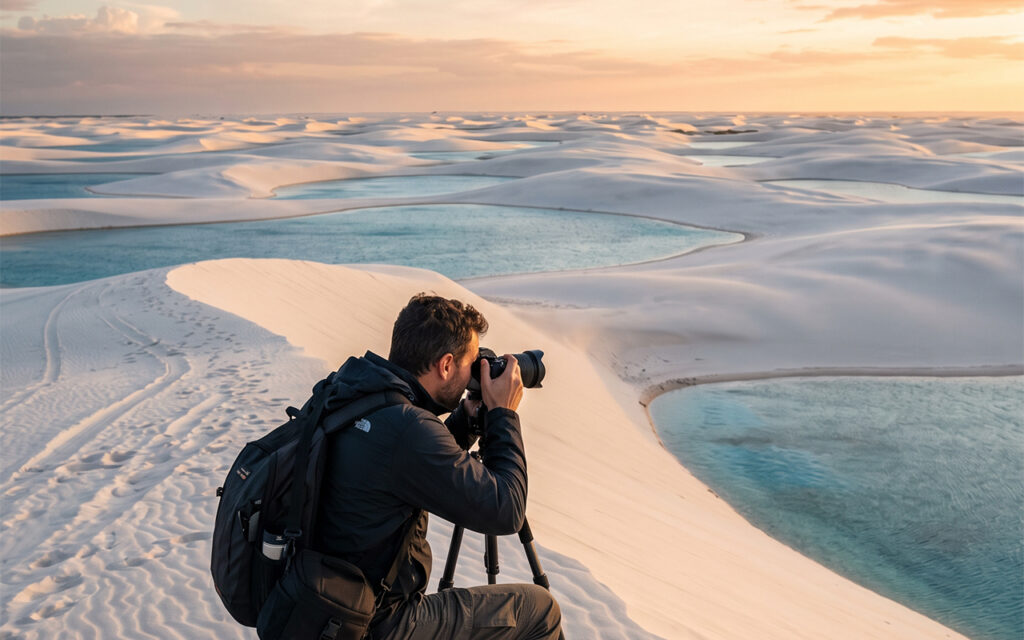
The village is a prime base because it puts three distinct landscapes within reach on the same day: the dune field, the river mouth, and the open beach.
Gavião, Kite, and Charme in the morning. Sete Mulheres and Maria Vitória in the late afternoon, when the water turns to glass. Details in the best lagoons.
Colorful kites against the white sand, fishing boats, and the line where the river meets the sea. Best between mid-morning and afternoon.
The flocking of scarlet ibises at five in the afternoon over the river, and the sandy streets of Atins with horses and buriti palms at the end of the day.
Regarding the season: the lagoons are fullest between July and September, which ensures reflections and vibrant color. In October there is still water in the main circuits, with fewer people in the frame. From January to June the landscape is different, greener.
See more articles
New Year’s Eve 2027 in the Lençóis Maranhenses: two barefoot parties at Rancharia Charme Beach, in Atins, with line-up, open bar, tickets and where to stay.
The dunes of Lençóis shift a few meters every year, driven by the same wind that draws kitesurfers. The lagoons…