
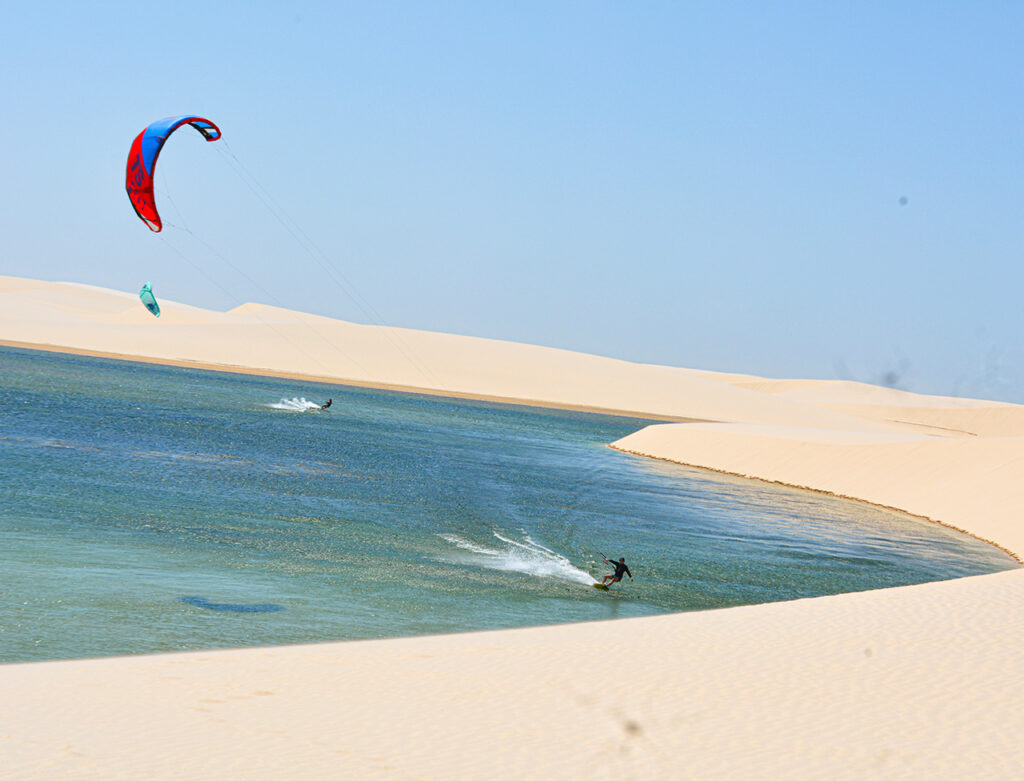
There is a moment, almost always in the mid-morning, when the air in Atins changes texture. Flags stretch out, the sand draws fine lines on the beach, and the sea takes on a new restlessness. It is the wind arriving from the Atlantic, the same one that has crossed Lençóis Maranhenses for centuries and transformed this village into a renowned destination for sailors and kitesurfers worldwide.
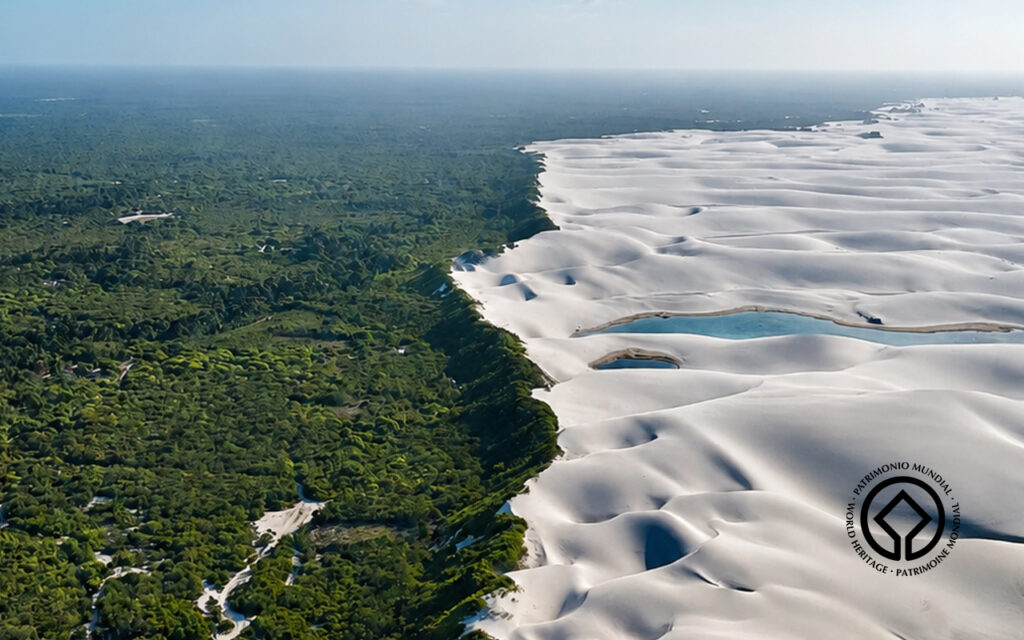
Kitesurfing in Lençóis Maranhenses is a dialogue between three elements: the constant northeast wind, the shallow waters of the Preguiças River mouth, and a 155,000-hectare dune field that serves as both a backdrop and a shelter. Few places combine flat water, open sea, and freshwater lagoons just minutes away from one another. In Atins, they share the exact same stretch of beach.
This guide brings together everything you need to know before arriving with your kite gear: the wind calendar, the spots, the equipment, and the progression for every level.
Atins is situated at the exact point where the Preguiças River meets the Atlantic Ocean, on the edge of the Lençóis Maranhenses National Park, designated a UNESCO Natural World Heritage site in July 2024. This geography defines everything. At low tide, the river mouth’s sandbars create stretches of flat, sheltered water with ankle- to waist-deep depths. At high tide, the sea makes way for clean swells.
The prevailing wind blows cross-shore, allowing you to launch and land with a solid safety margin. There are no rocks, no coral, and no boats crossing the riding zone. Water temperature stays around 28°C (82°F) year-round, matched by the air temperature. Kitesurfing here requires no wetsuit, no watch, and no competition for space.
The village itself is part of the experience. Atins preserves a human scale, free from chain hotels and mass tourism. You can walk from your accommodation to the water in minutes. Before booking, it is worth understanding how to get to Atins, as the logistics are an essential part of any kite trip to Lençóis.
The wind window in Atins opens around July and extends through January. Within this period, there is a remarkably consistent window: from September to December, the wind blows almost every single day, with speeds usually ranging between 18 and 30 knots from late morning throughout the afternoon.
October to December is the true kitesurfer season. The Lençóis lagoons still hold water, the wind is generous, and the village receives fewer travelers, offering mid-season rates. It is the preferred combination for those coming to ride consecutive days.
July to September is the destination’s peak season, with the lagoons at their fullest and more people in town. This is the choice for anyone looking to split their trip between kiteboarding and exploring the park. From January to March, the wind becomes inconsistent. For a trip dedicated to kitesurfing, September to December is the heart of the season.
The riding area stretches across just a few kilometers, allowing you to choose the day’s conditions based on the tide, your mood, and your skill level.
Shallow, flat water over the sandbars, sheltered from the open sea. The best terrain for learning and practicing precision maneuvers.
A long stretch of sand with cross-shore wind and gentle swells. Plenty of space to ride in a straight line and build up speed.
Freshwater, mirror-like surfaces, and surrounding dunes. Seasonal condition, subject to lagoon water levels, and always accessed with a guide.
Vehicle traffic inside the National Park is restricted to operators accredited by ICMBio. All transfers to the lagoons are conducted using authorized vehicles.
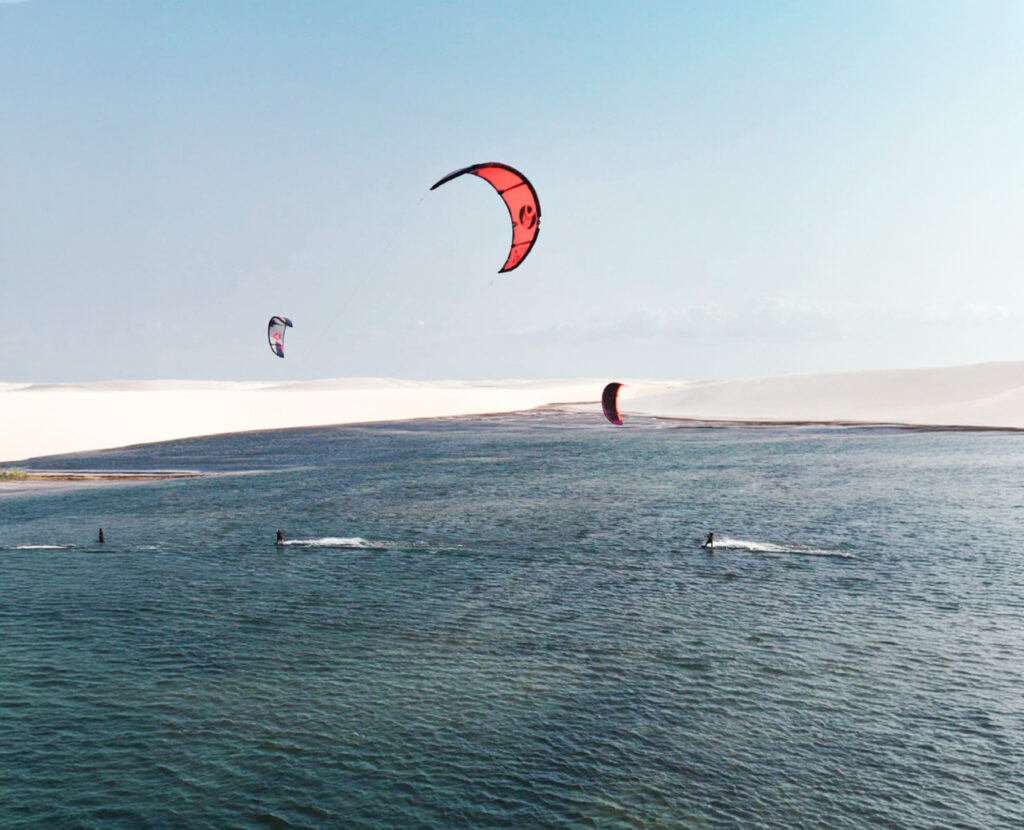
Atins is a welcoming place for your very first lesson. The shallow water at the river mouth allows you to stand on your feet while learning to control the kite, and the steady wind reduces the element of surprise that often intimidates beginners at other spots.
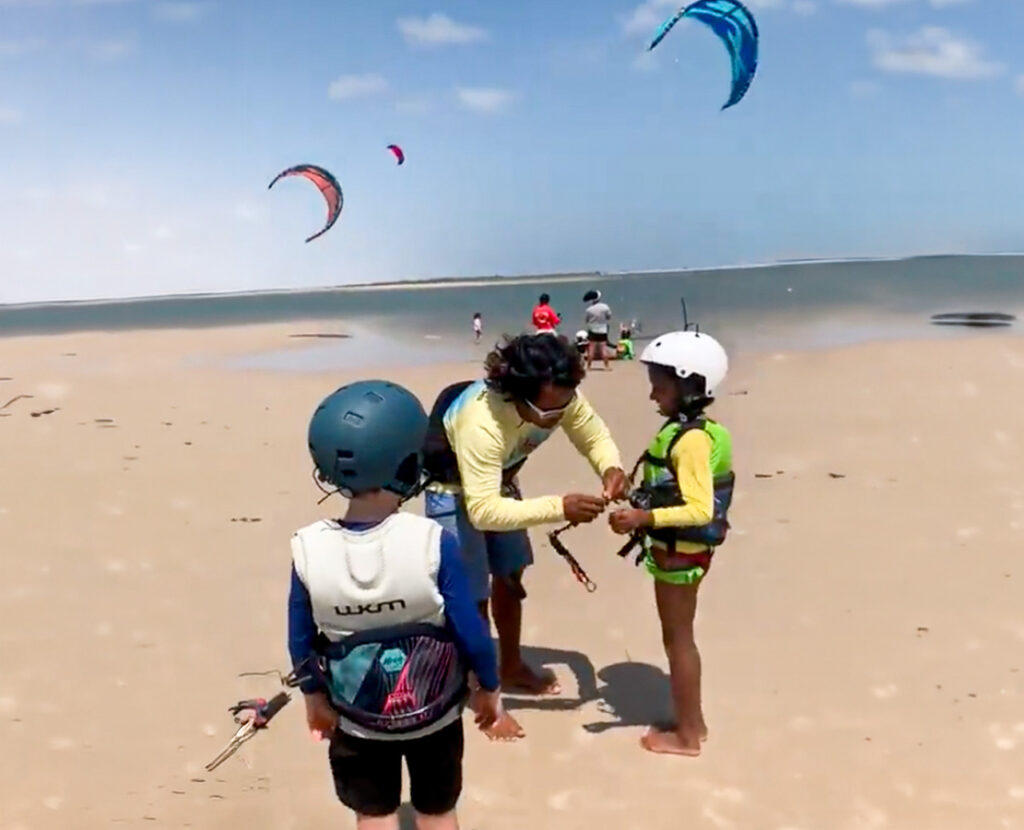
Schools with certified instructors operate in the village, offering two- to three-hour lessons with gear included, either individually or in pairs. The typical progression takes three to five days to reach the water start and pull off your first rides from side to side. Booking lessons before traveling is recommended during the wind season, when instructors’ schedules fill up quickly.
Between September and December, 7 to 9-meter kites will cover most days for average-weight riders. At the edges of the season, in July and January, it is worth packing a larger size, from 10 to 12 meters, for lighter wind days. A twintip handles everything, while a directional board expands your possibilities on swell days.
A wetsuit is not necessary. A long-sleeve rashguard, water-resistant sunscreen, and a helmet make up the protection kit—more for sun protection than cold. Local schools rent gear, but availability is limited: those with their own equipment usually bring it and inform the transfer service about the extra luggage on the way to the village.
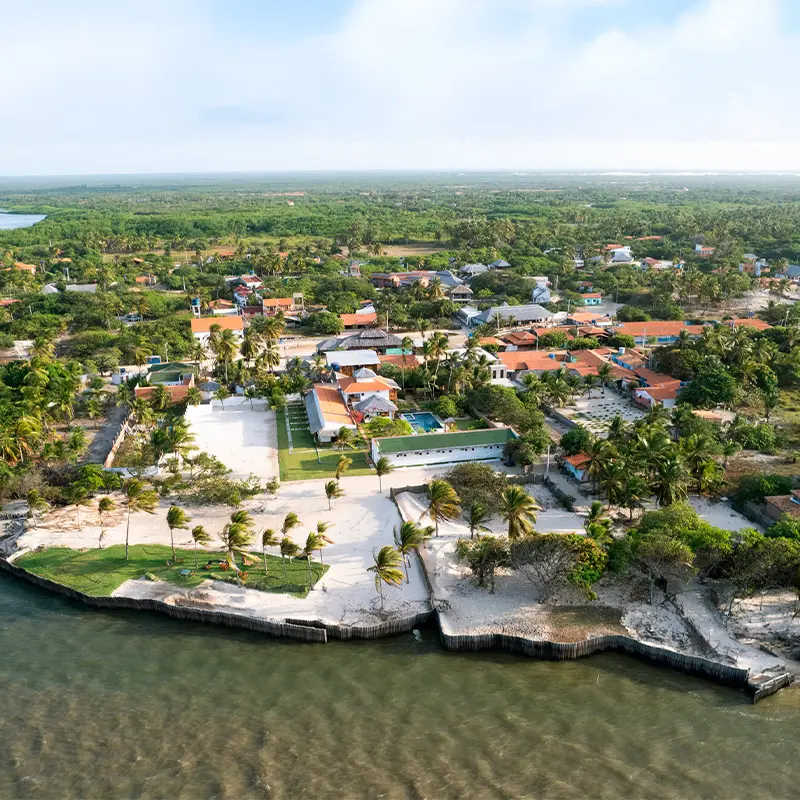
Your accommodation defines the rhythm of a kite trip. Being just steps away from the water changes your relationship with the wind: you can look out the window, see the flag stretch out, and head right out.
Beachfront, featuring architecture open to the breeze and a swimming pool, nestled between the Preguiças River and the Atlantic. The only lodge in Maranhão listed in the Roteiros de Charme Association.
Twenty-one chalets surrounded by the buriti palms of the restinga. An invitation to elegant simplicity, with spacious options for groups and families.
Eight suites, generous spaces, and personalized attention. The choice for those seeking privacy and a more intimate level of care.
No season is made entirely of wind, and in Atins that is part of the charm. The lagoons can be visited on horseback, by dune buggy, or by ATV. The Preguiças River is navigated down to the Pequenos Lençóis. In the late afternoon, the flocking of scarlet ibises paints the sky above the mangroves. There is also dinner served atop the sand dunes. The full selection can be found in experiences.
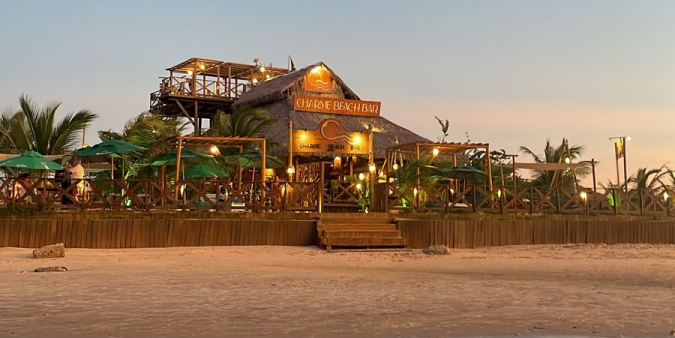
Gastronomy wraps up the day. The Atins Charme Beach Bar hosts oceanfront lunches and accompanies the sunset. Ça-Vá Charme Atins gathers the most social table in the village, serving Mediterranean cuisine with Maranhão influences. The Sushi Bar Charme Atins works with the catch of the day. After hours in the salt water, a well-set table is just as important as the wind.
There are spots that are easier to reach and spots with more infrastructure. What Atins offers is something else entirely: riding inside a landscape recognized as a UNESCO World Heritage site, with South America’s largest dune field at your back and a human-scale village waiting upon your return.
Grupo Charme Atins was born out of this connection with the land. Our lodges, bars, and restaurants exist so that your trip makes sense from the kite’s first launch to the final dinner, set to the slow-paced rhythm that this destination demands. It is also worth checking out our guide on where to kitesurf in the region.
The wind arrives every single day. It is up to you to decide which season you will be here to welcome it.
Our Charme Concierge will help you choose your dates, arrange transfer with your kite gear, and design your days on the water.
Talk to our team on WhatsAppSee more articles

New Year’s Eve 2027 in the Lençóis Maranhenses: two barefoot parties at Rancharia Charme Beach, in Atins, with line-up, open bar, tickets and where to stay.
The dunes of Lençóis shift a few meters every year, driven by the same wind that draws kitesurfers. The lagoons…